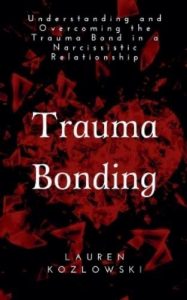
Why I Recommend Trauma Bonding by Lauren Kozlowski
Every now and then I come across a book that I find myself recommending again and again to clients. Trauma Bonding by Lauren Kozlowski is one of those books.
It’s a lovely little book – easy to read, straightforward, and packed with insight. Lauren has written several books about recovering from narcissistic and abusive relationships, drawing not only on research but also on her own lived experience. That comes across in her writing. There is a genuine understanding of what survivors go through and a sense that she is walking alongside the reader rather than talking down to them.
One of the reasons I recommend this book so often is because trauma bonding can be one of the most confusing aspects of an abusive relationship. Clients will often tell me, “I know what they did was wrong, so why can’t I stop thinking about them?” Or, “Why do I still feel sorry for them after everything they’ve done?”
These questions can leave people feeling frustrated with themselves. They think they should be over it by now. The people close to them often ask and wonder why they still feel pulled towards someone who manipulated, controlled, lied to, or harmed them.
The answer is often trauma bonding.
Trauma bonds are powerful emotional attachments that develop through cycles of abuse, fear, hope, and intermittent kindness. They don’t disappear the moment we leave the relationship. In many cases, the bond can remain long after the relationship has ended.
We might know, logically, that the person was harmful, but still feel a deep sense of pity for them. We may feel physically sick at the thought of reporting them or holding them accountable. Their voice still echoes in our minds. Their opinions still influence our decisions. We may even find ourselves missing them despite everything that happened.
This doesn’t mean we wanted the abuse. It doesn’t mean we are weak. It means we have been affected by a very powerful psychological process.
Lauren Kozlowski explains this process beautifully. She explores the dynamics of trauma bonding, draws links with Stockholm Syndrome, and helps readers understand why they feel the way they do. More importantly, she offers hope.
As a therapist, I know how important it is for survivors to understand what has happened to them. Understanding doesn’t heal everything, but it often removes a great deal of self-blame and shame. When people realise there is a name for what they are experiencing, they often begin to feel less alone and less confused.
If you are struggling to understand why you still feel emotionally attached to an abusive former partner, this book could be a valuable place to start. It shines a light into a very dark and confusing space and gently guides readers towards recovery.
Sometimes healing begins with understanding. This little book offers exactly that.